Córdoba
The first of the game's five lands, restored with Surah Ar-Rahman: its 78 ayat are recited across the twelve pieces of the painting, a few at each.
From Surah Ar-Rahman
بِسْمِ ٱللَّهِ ٱلرَّحْمَٰنِ ٱلرَّحِيمِ
ٱلرَّحْمَٰنُ ﴿١﴾ عَلَّمَ ٱلْقُرْءَانَ ﴿٢﴾ خَلَقَ ٱلْإِنسَٰنَ ﴿٣﴾ عَلَّمَهُ ٱلْبَيَانَ ﴿٤﴾
The journey through Córdoba
30 levels, 3 gates, 3 gifts.
Its levels ask easy questions, and each asks a little more than the one before. Gifts wait at levels 5, 15 and 25. The gates at 10, 20 and 30 mix the land's games in one longer round, and each gate won restores four of the garden's pieces.
The games played here
- Guess the Surah · first met here
- Makki or Madani? · first met here
- Match the Pairs · first met here
- Next Ayah · first met here
- Names of Allah · first met here
- Word Reorder · first met here
- Prophet Stories · first met here
- Surah Facts · first met here
- Word Search · first met here
- Fill in the Blank · first met here
- Seerah Timeline · first met here
The history of its twelve pieces
Each piece the gates restore is recited from the surah and told with a short history of the place, as the game tells it.
The Fountain
Ayat 1–4
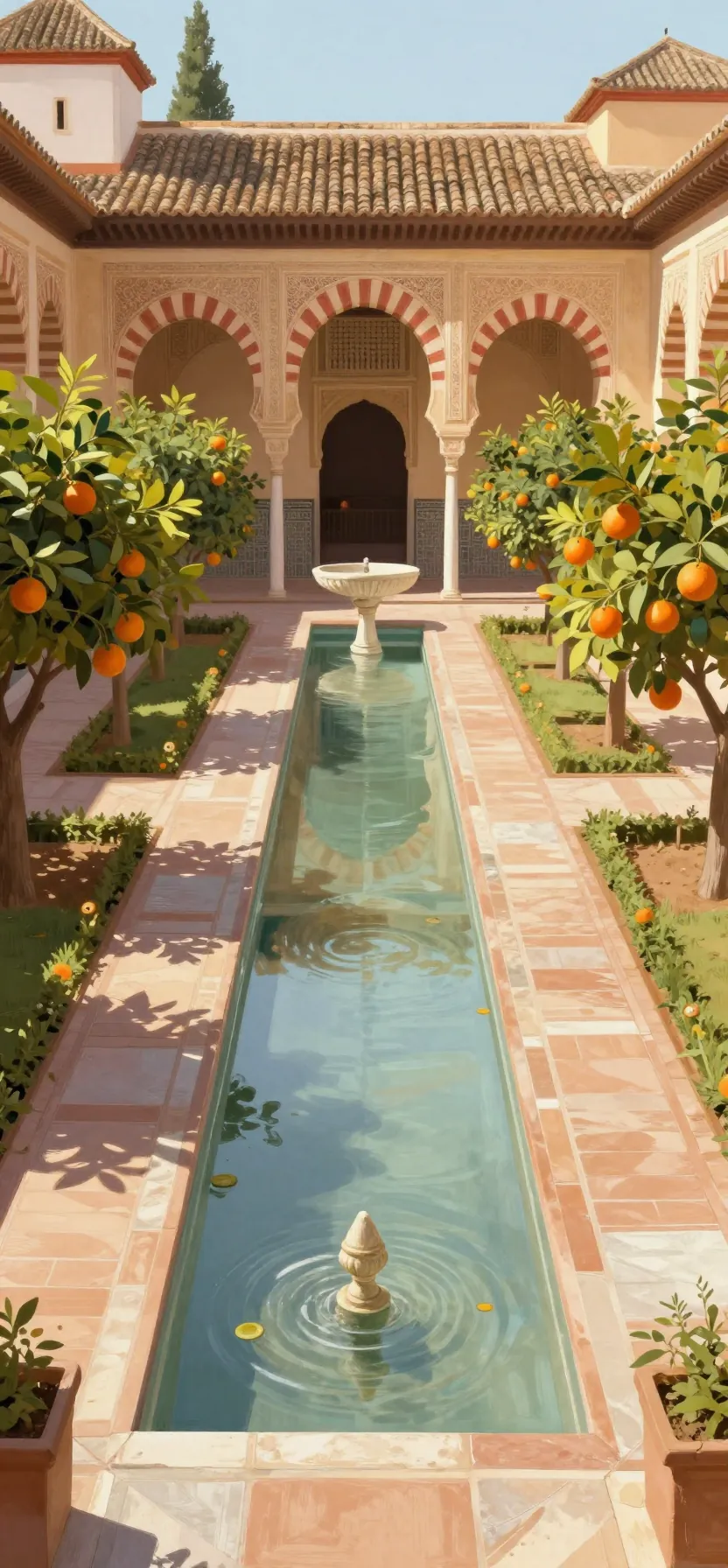
A garden of al-Andalus began with water. A fountain at the end of the long pool kept the water moving and its sound filled the courtyard, so the garden was heard before it was seen.
The Upper Basin
Ayat 5–9
A raised marble basin let water spill gently into the pool below. Its level was set with care: the gardeners of al-Andalus measured slopes so that water could cross a whole garden by its own weight.
The Water Channel
Ayat 10–13
Channels, called acequias, carried water along the garden's axis and out to every bed. The word passed from Arabic into Spanish, and many of the irrigation systems of Andalusia still follow their old courses.
The Orange Trees
Ayat 14–18
The bitter orange came west with the Muslims of al-Andalus, who planted it in courtyards for its shade, its blossom and its scent. The courtyard of Córdoba's Great Mosque is still known as the Court of the Oranges.
The Grove
Ayat 19–25
Trees were planted in rows that continued the lines of the arches, so that a grove and a building read as one. Walking through a courtyard was walking through a colonnade of trunks and stone.
The Young Trees
Ayat 26–30
Agronomists of al-Andalus wrote books on grafting, sowing and caring for trees. The Book of Agriculture of Ibn al-Awwam, written in Seville, gathered this knowledge and was studied for centuries.
The Flower Beds
Ayat 31–36
Beds were often sunk below the paths, so that a person walking saw the flowers spread like a carpet at their feet. Roses, myrtle, jasmine and herbs were chosen as much for scent as for colour.
The Tiled Paths
Ayat 37–45
Paths of fired brick and glazed tile framed the water and the beds. Their patterns, built from stars and polygons, show the geometry that craftsmen of the Islamic world brought to every surface.
The Left Arcade
Ayat 46–53
The horseshoe arch was known in Spain before Islam, and the Umayyads of Córdoba made it their own. In the Great Mosque, arches of alternating red brick and pale stone march in rows like palm trees.
The Right Arcade
Ayat 54–61
A covered arcade gave shade in summer and a place to sit, read and teach. Córdoba under the Umayyads was famed for its libraries and scholars, and its courtyards were places of learning as well as rest.
The Great Arch
Ayat 62–69
The central arch framed the doorway and the garden's main axis, so that from inside, the view ran straight down the water. Gardens of this kind, divided by water into parts, were planted from al-Andalus to India.
The Roof and Towers
Ayat 70–78
Roofs of curved clay tiles kept the rooms below cool and sent the rain into the garden's cisterns. With the roof whole again, the courtyard is restored, as its builders meant it: a place of water, shade and remembrance.
The road through Córdoba
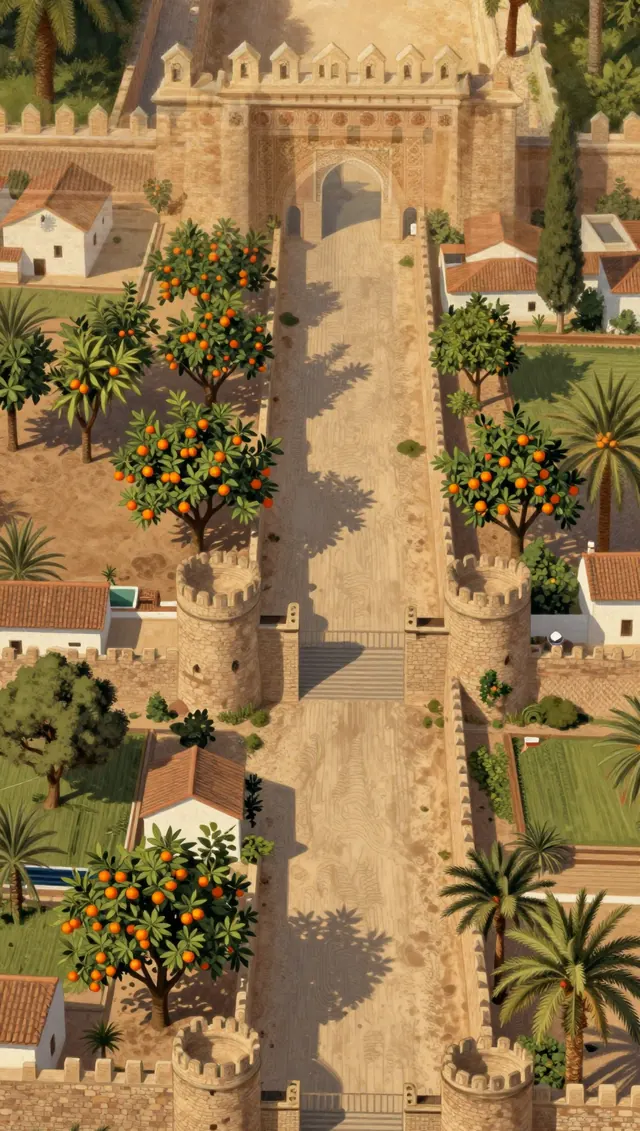
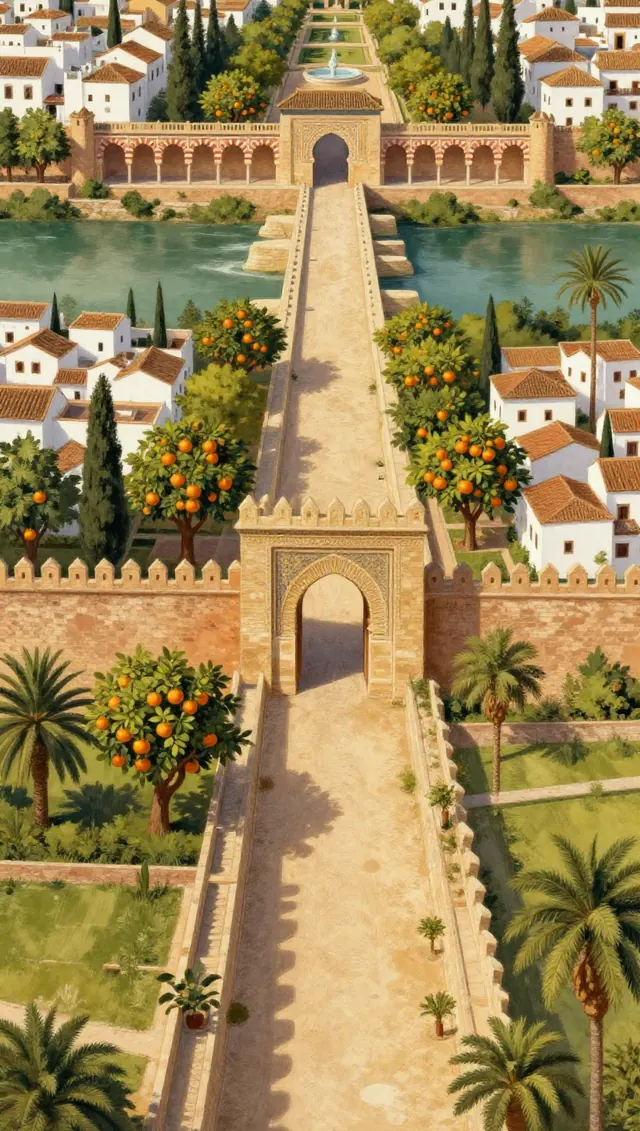
The land's map in the game: thirty stops from its gate at the foot to its garden at the top, the lantern standing on the level being played.