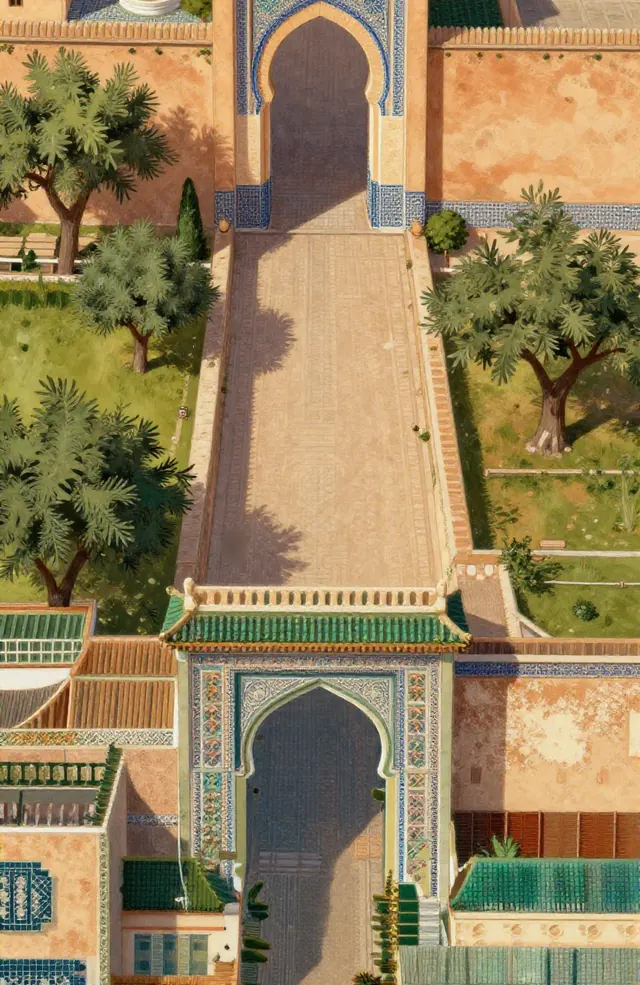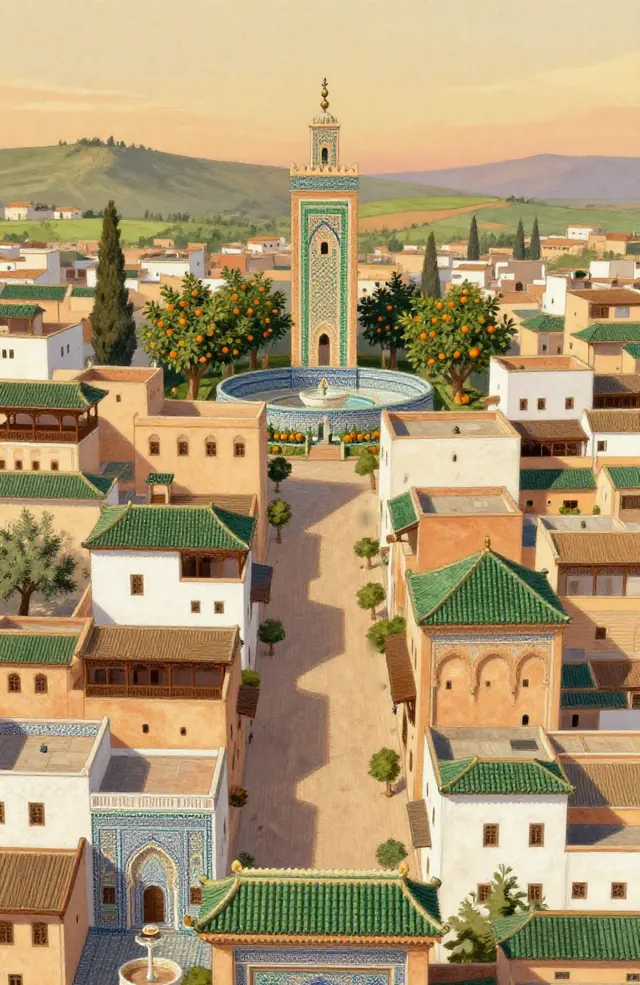
Fez
The second of the game's five lands, restored with Surah Al-Alaq: its 19 ayat are recited across the twelve pieces of the painting, a few at each.
From Surah Al-Alaq
بِسْمِ ٱللَّهِ ٱلرَّحْمَٰنِ ٱلرَّحِيمِ
ٱقْرَأْ بِٱسْمِ رَبِّكَ ٱلَّذِى خَلَقَ ﴿١﴾ خَلَقَ ٱلْإِنسَٰنَ مِنْ عَلَقٍ ﴿٢﴾ ٱقْرَأْ وَرَبُّكَ ٱلْأَكْرَمُ ﴿٣﴾ ٱلَّذِى عَلَّمَ بِٱلْقَلَمِ ﴿٤﴾ عَلَّمَ ٱلْإِنسَٰنَ مَا لَمْ يَعْلَمْ ﴿٥﴾
The journey through Fez
30 levels, 3 gates, 3 gifts.
Its levels ask medium questions, and each asks a little more than the one before. Gifts wait at levels 5, 15 and 25. The gates at 10, 20 and 30 mix the land's games in one longer round, and each gate won restores four of the garden's pieces.
The games played here
- Previous Ayah · first met here
- Next Ayah
- Verse Sequence · first met here
- Names of Allah
- Word Meaning · first met here
- Quranle · first met here
- Fill in the Blank
- Makki or Madani?
- Word Search
- Seerah Timeline
- Crossword · first met here
- Hifz Trainer · first met here
- Surah Facts
- Survival Mode · first met here
- Guess the Surah
- Prophet Stories
The history of its twelve pieces
Each piece the gates restore is recited from the surah and told with a short history of the place, as the game tells it.
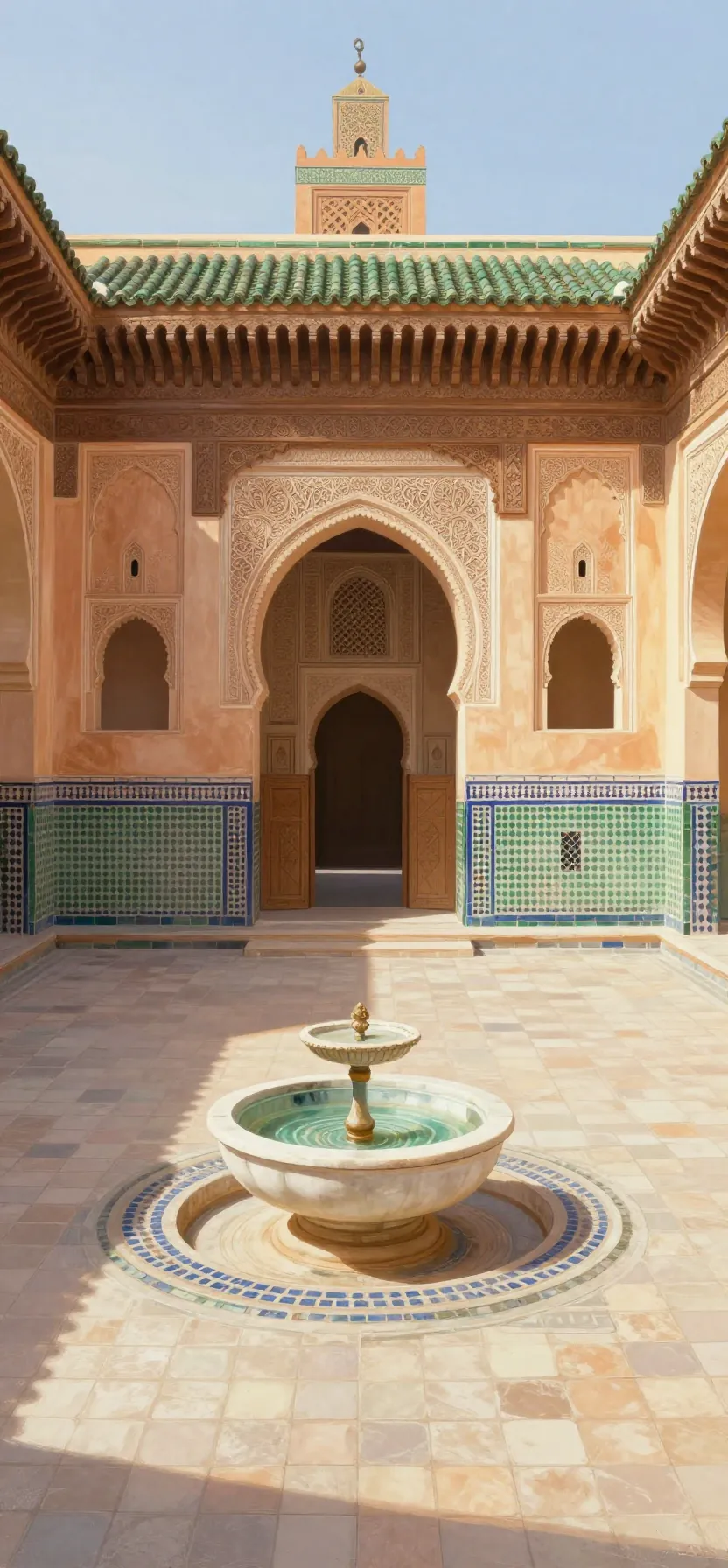
The Ablution Fountain
Ayat 1–2
A madrasa's courtyard was built around water. Students washed at its fountain before prayer, and its quiet sound carried into the rooms where they read and copied their lessons.
The Tiled Ring
Ayat 3–4
Rings of small glazed tiles framed the basin. Laid piece by piece, they gave a simple floor the same care as the walls, so that nothing in the courtyard was left plain.
The Courtyard Floor
Ayah 5
Fez grew around its great mosque and university, al-Qarawiyyin, founded in 859 by Fatima al-Fihri. Students came from across North Africa and beyond to learn there, and the city's madrasas housed them.
The Left Zellige
Ayat 6–7
Zellige is a mosaic of glazed tiles cut by hand, one small piece at a time, into stars and polygons. The craft is still practised in Fez, where master craftsmen learn it over many years.
The Right Zellige
Ayah 8
A zellige pattern begins from a single star and grows outward by rule, so a wall can be filled without a seam. Geometry was a way to show order and unity without drawing a single figure.
The Cedar Door
Ayat 9–10
Doors of carved cedar from the Atlas mountains guarded the prayer hall. Cedar resists rot and insects, which is why so much woodwork in the madrasas of Fez has lasted for centuries.
The Great Arch
Ayat 11–12
Above the doors rose arches of carved plaster, cut while the plaster was still soft into lace-like patterns. Seen from the courtyard, they framed the way into the hall of prayer and study.
The Lattice Windows
Ayat 13–14
Upstairs, students lived in small rooms around the courtyard. Wooden lattices over the windows let in light and air while keeping the rooms private and cool.
The Carved Plaster
Ayah 15
The Marinid sultans of the fourteenth century built several of Fez's madrasas. Their builders covered the upper walls with carved plaster, so that every surface the eye met had its own careful design.
The Cedar Frieze
Ayah 16
A deep frieze of carved cedar ran under the eaves, shading the walls below from the sun. Its rows of small brackets carry the roof and show the carpenter's skill at the same time.
The Green Roof
Ayat 17–18
Roofs of green glazed tiles are a mark of Morocco's mosques and madrasas. From the city's hills, their colour picks out the places of prayer and learning among the houses.
The Minaret
Ayah 19
The square minarets of Morocco follow a tradition of the Islamic west. With the minaret restored, the madrasa is whole again: a house of water, wood, tile and learning, where the first word revealed was Read.
The road through Fez
The land's map in the game: thirty stops from its gate at the foot to its garden at the top, the lantern standing on the level being played.