Samarkand
The fifth of the game's five lands, restored with Surah Al-Mulk: its 30 ayat are recited across the twelve pieces of the painting, a few at each.
From Surah Al-Mulk
بِسْمِ ٱللَّهِ ٱلرَّحْمَٰنِ ٱلرَّحِيمِ
تَبَٰرَكَ ٱلَّذِى بِيَدِهِ ٱلْمُلْكُ وَهُوَ عَلَىٰ كُلِّ شَىْءٍ قَدِيرٌ ﴿١﴾ ٱلَّذِى خَلَقَ ٱلْمَوْتَ وَٱلْحَيَوٰةَ لِيَبْلُوَكُمْ أَيُّكُمْ أَحْسَنُ عَمَلًا ۚ وَهُوَ ٱلْعَزِيزُ ٱلْغَفُورُ ﴿٢﴾
The journey through Samarkand
30 levels, 3 gates, 3 gifts.
Its levels ask hard questions, and each asks a little more than the one before. Gifts wait at levels 5, 15 and 25. The gates at 10, 20 and 30 mix the land's games in one longer round, and each gate won restores four of the garden's pieces.
The games played here
The history of its twelve pieces
Each piece the gates restore is recited from the surah and told with a short history of the place, as the game tells it.
The Pool
Ayat 1–2
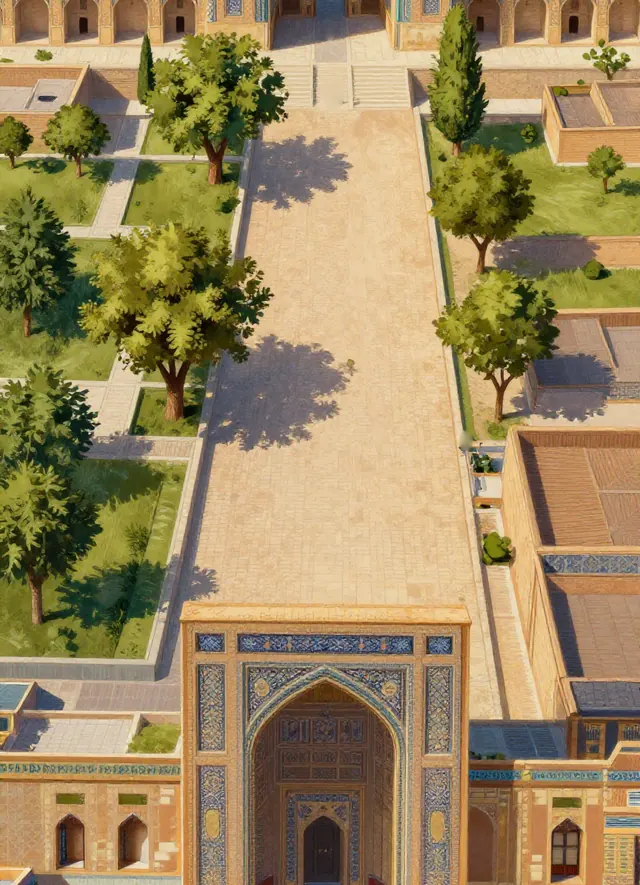
Samarkand grew on the Silk Road, where caravans from China, India, Persia and the Mediterranean met. Its squares and pools welcomed travellers carrying goods, books and ideas.
The Steps
Ayat 3–4
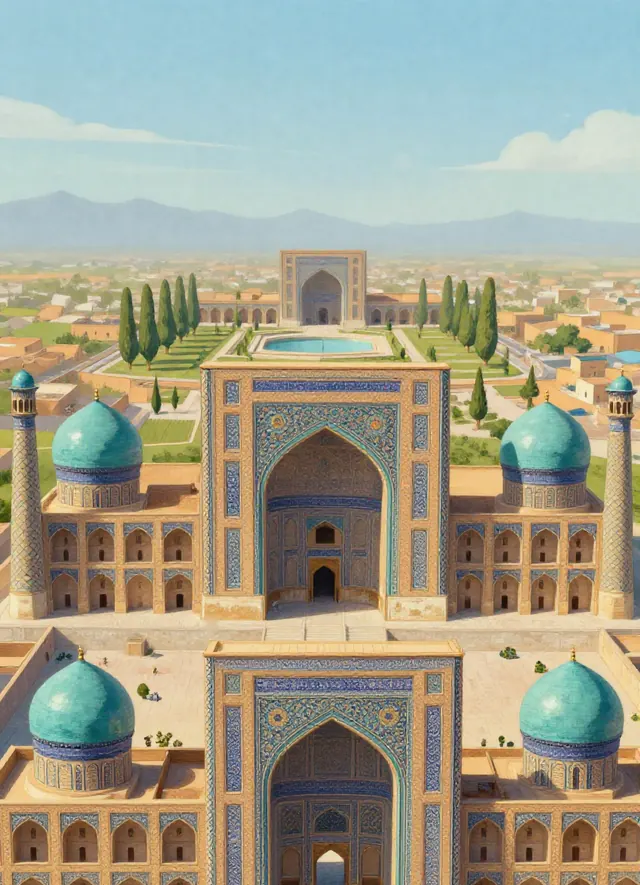
The Registan, meaning the sandy place, was Samarkand's great public square. Three madrasas now face it, built over more than two centuries.
The Door
Ayat 5–6
Behind the portal lay a courtyard ringed with small rooms, where students lived and studied. Lessons covered the Quran, law and the sciences, mathematics and astronomy among them.
The Great Portal
Ayat 7–11
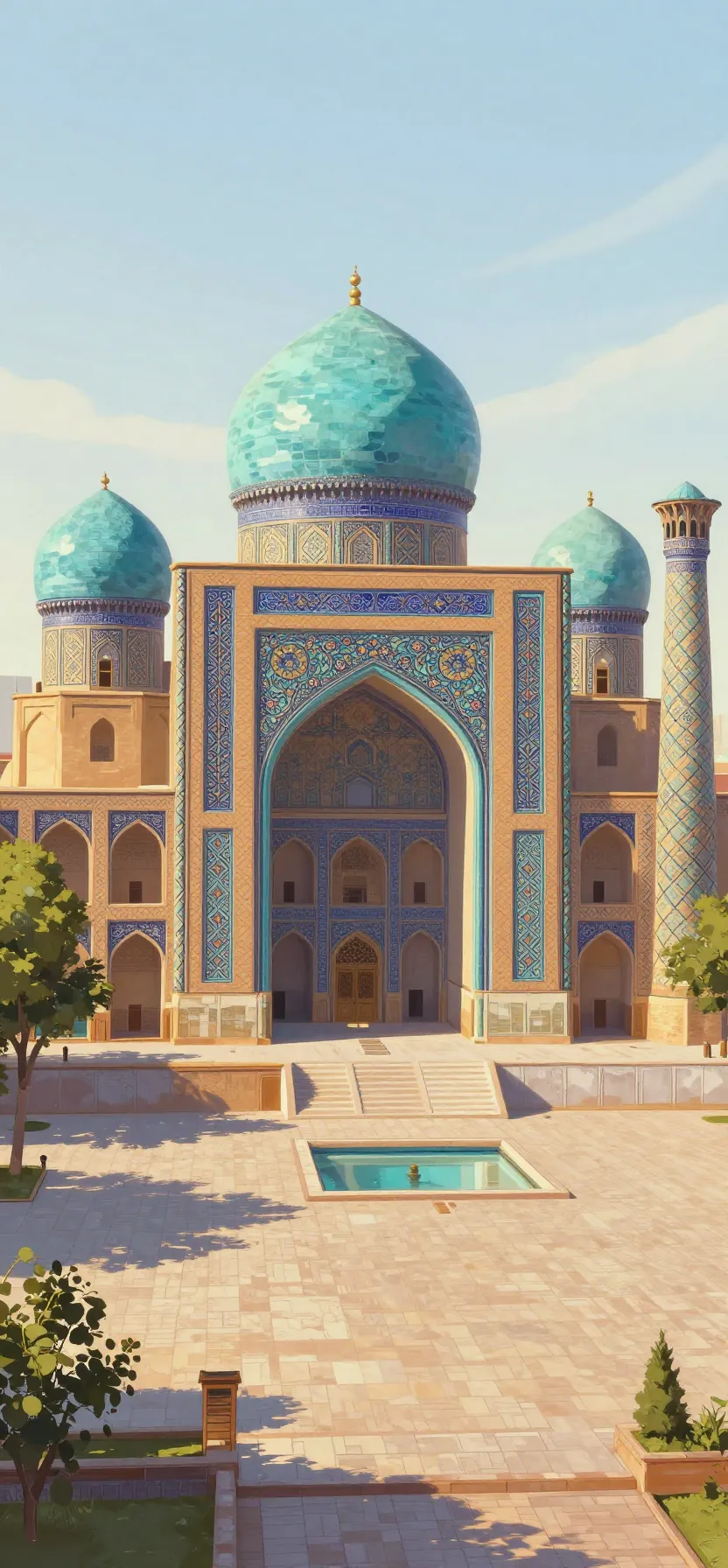
The pishtaq, a towering portal framed by a rectangle of tiles, announces the building from far across the square. Its deep arch shades the entrance and draws the eye inward.
The Portal's Frame
Ayat 12–14
Builders in Samarkand covered walls with glazed bricks set in patterns, a technique called banna'i. From a distance, the plain brick and the shining glaze combine into bold geometry.
The Left Wing
Ayat 15–16
The oldest of the Registan's madrasas was built by Ulugh Beg, grandson of Timur, between 1417 and 1420. He was a ruler and an astronomer, and he taught there himself.
The Right Wing
Ayat 17–19
Ulugh Beg's observatory on a hill near the city held a great curved sextant cut into the ground. His astronomers measured the positions of about a thousand stars.
The Great Dome
Ayat 20–22
Timur made Samarkand his capital in the fourteenth century and filled it with buildings of record size. Their turquoise domes, raised high on drums, became the mark of the city's skyline.
The Small Domes
Ayat 23–24
Many of the city's domes are ribbed or fluted, built as a double shell: a tall outer dome to be seen from afar, and a lower inner one shaped for the room beneath it.
The Minaret
Ayat 25–27
Slender minarets wrapped in tile mark the corners of the madrasas. Over the centuries several leaned with earthquakes, and twentieth-century engineers straightened them.
The Plane Trees
Ayat 28–29
Samarkand was famed for its paper, made from plant fibre, which helped books spread through the Islamic world. Its gardens of plane trees and its streams were praised by every traveller.
The Square
Ayah 30
With the square restored, the Registan is whole again: a place where traders, scholars and travellers met beneath the tiles, and where the sky above was studied as carefully as the books within.
The road through Samarkand
The land's map in the game: thirty stops from its gate at the foot to its garden at the top, the lantern standing on the level being played.