Timbuktu
The third of the game's five lands, restored with Surah Al-Qalam: its 52 ayat are recited across the twelve pieces of the painting, a few at each.
From Surah Al-Qalam
بِسْمِ ٱللَّهِ ٱلرَّحْمَٰنِ ٱلرَّحِيمِ
نٓ ۚ وَٱلْقَلَمِ وَمَا يَسْطُرُونَ ﴿١﴾ مَآ أَنتَ بِنِعْمَةِ رَبِّكَ بِمَجْنُونٍ ﴿٢﴾ وَإِنَّ لَكَ لَأَجْرًا غَيْرَ مَمْنُونٍ ﴿٣﴾ وَإِنَّكَ لَعَلَىٰ خُلُقٍ عَظِيمٍ ﴿٤﴾
The journey through Timbuktu
30 levels, 3 gates, 3 gifts.
Its levels ask medium questions, and each asks a little more than the one before. Gifts wait at levels 5, 15 and 25. The gates at 10, 20 and 30 mix the land's games in one longer round, and each gate won restores four of the garden's pieces.
The games played here
The history of its twelve pieces
Each piece the gates restore is recited from the surah and told with a short history of the place, as the game tells it.
The Reading Stand
Ayat 1–4
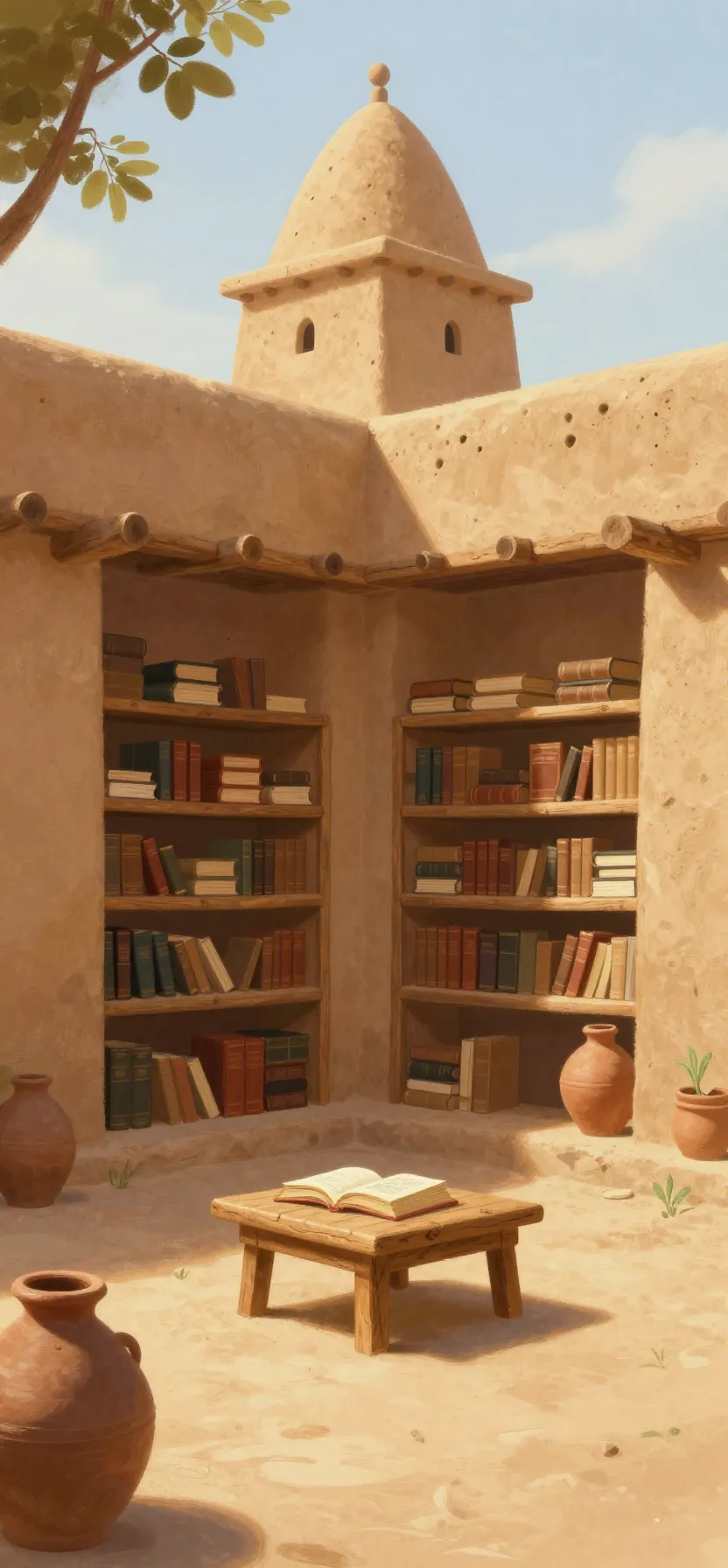
Timbuktu's scholars taught in mosques and in their own homes. A student read from a book set on a low stand, with a teacher beside him, and copied what he learned by hand.
The Left Shelves
Ayat 5–9
Families of Timbuktu kept libraries of manuscripts for generations: works of law, grammar, astronomy, medicine and poetry, bought, copied and handed down from parent to child.
The Right Shelves
Ayat 10–16
Books arrived with the trans-Saharan caravans, alongside salt and gold. Copyists in the city made new copies, and paper, ink and fine bindings were valued goods in the market.
The Earthen Minaret
Ayat 17–20
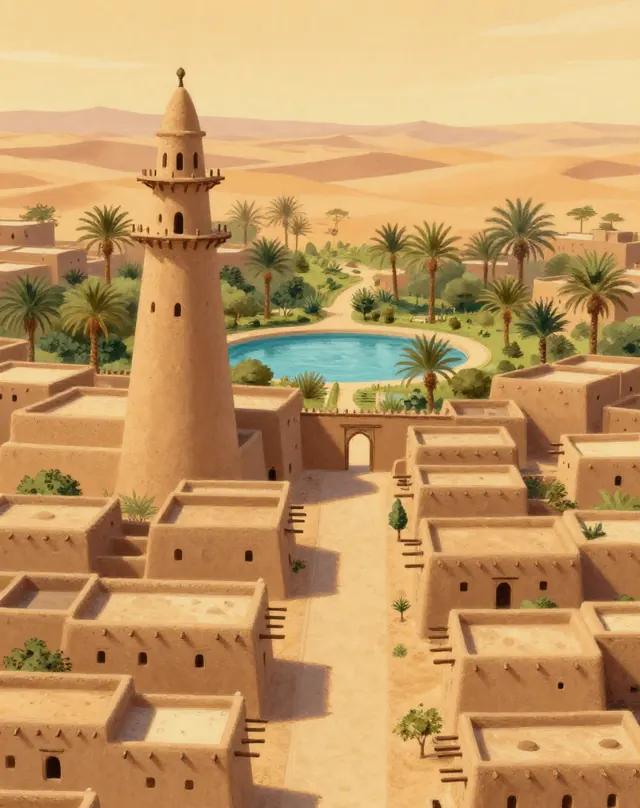
Timbuktu's great mosques, Djinguereber and Sankore, were built of earth. Djinguereber was begun in the fourteenth century, after Mansa Musa of Mali returned from his pilgrimage to Makkah.
The Mud Walls
Ayat 21–25
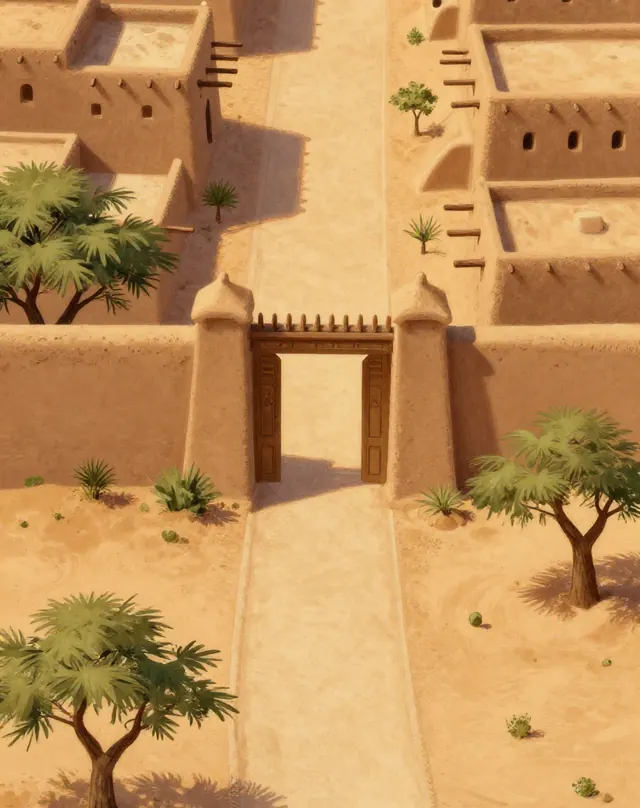
Walls of sun-dried mud brick keep rooms cool through the desert's heat. Each year, after the rains, the people of the city come together to lay fresh mud over their mosques.
The Courtyard Wall
Ayat 26–29
Plaster of mud and straw is smoothed by hand. Without that yearly care an earthen building slowly returns to the earth, so a mosque in Timbuktu is kept alive by its whole community.
The Beams
Ayat 30–33
Wooden beams called toron jut from the walls of the region's mud buildings. They strengthen the walls and serve as a ready scaffold for the workers who replaster them.
The Great Jar
Ayat 34–38
Large clay jars kept water cool by letting a little of it seep through and evaporate. In a desert city, water and shade were the first things a house of learning needed.
The Small Jars
Ayat 39–43
Ink was made by hand from soot, gum and water, and kept in small pots. A scholar's tools were few: a reed pen, ink, paper, and a good memory trained by years of recitation.
The Shade Tree
Ayat 44–47
Lessons were often given in the open air, in the shade of a tree or a wall. A circle of students around a teacher was a school wherever it gathered.
The Sand Courtyard
Ayat 48–50
In 2012 and 2013, when war reached Timbuktu, librarians and families carried hundreds of thousands of manuscripts away in secret, in boxes and sacks, to keep them safe.
The Upper Wall
Ayat 51–52
With the upper wall restored, the library stands whole again: a house of earth and books, kept by people who believed that what the pen writes is worth carrying through any danger.
The road through Timbuktu
The land's map in the game: thirty stops from its gate at the foot to its garden at the top, the lantern standing on the level being played.